Nest Platform
Critical infrastructure runs on aging equipment. The aging equipment is managed by outdated reporting and copies of spreadsheets. Nest changes that by giving operators, safety managers, and inspectors a single place to track, understand, and act on equipment data.
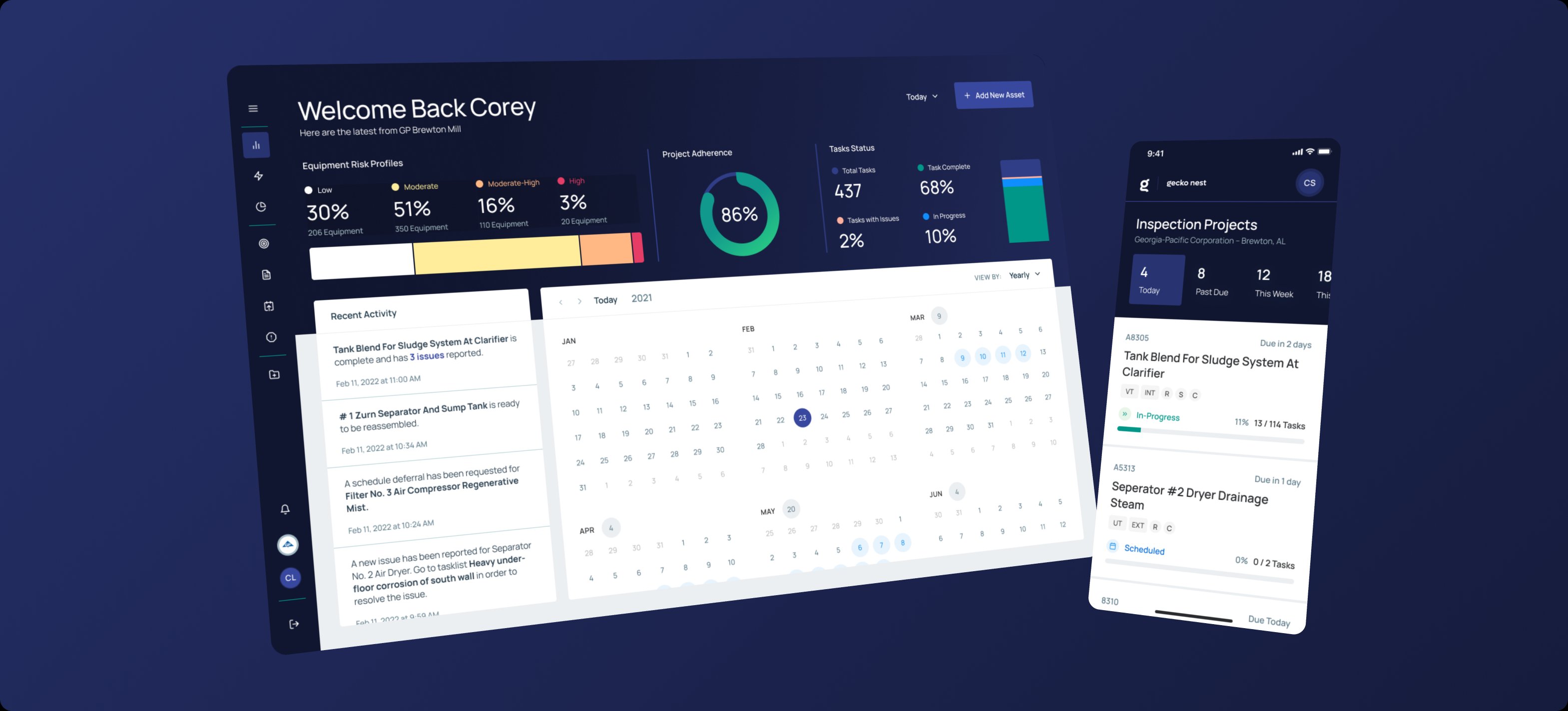
Designing from the field up
I led the design for Nest, Gecko's centralized platform for equipment inspection management. I started by joining the teams in the field — inspectors on-site, managers tracking compliance, safety leads monitoring remotely. Three things kept coming up across every conversation: they needed data that told them what to do next, trends over time not just point-in-time snapshots, and access that worked on different devices.
From that research I focused on three core areas:
Surfacing the right alerts. Equipment failures leave signals before they happen. I redesigned how inspection flags and regression alerts were surfaced so every user could see what needed attention and act on it immediately.
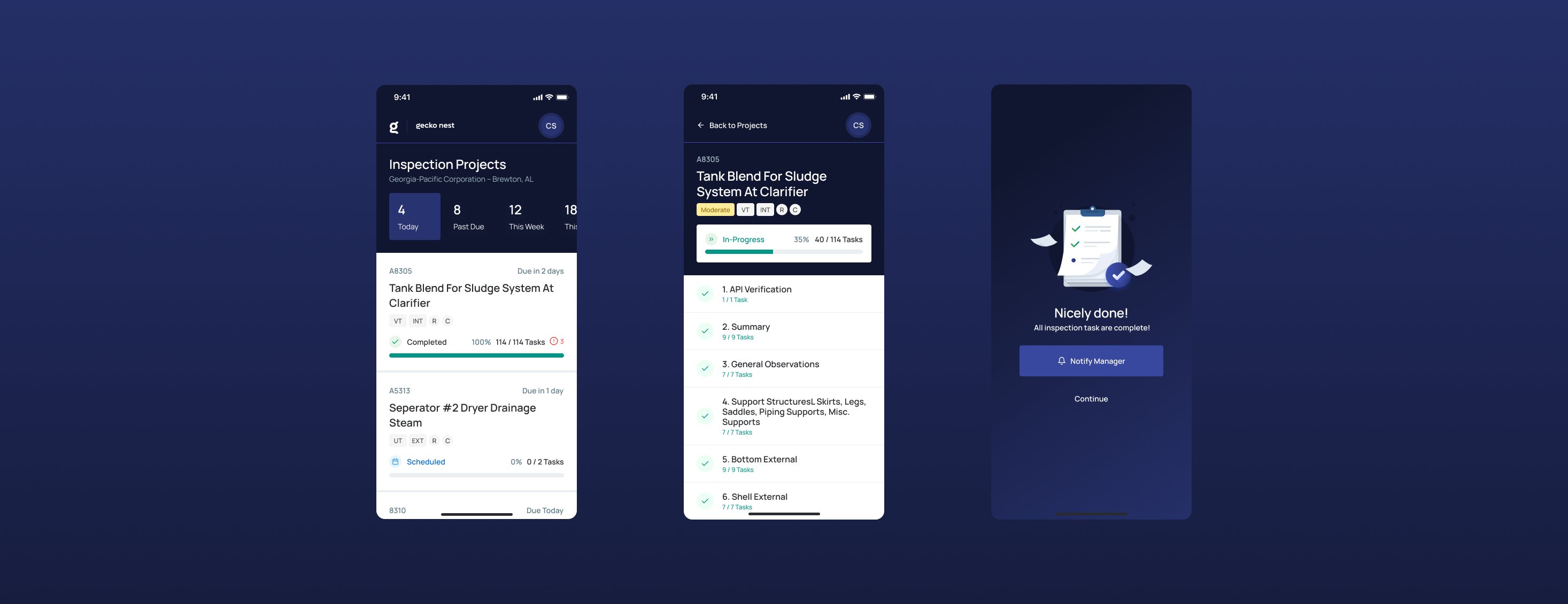
Simplifying the inspection flow. The existing process required too many steps and gave no clear summary at the end. I rebuilt it around the inspector's mental model — starting from the asset, moving through the checklist, ending with a report managers could immediately act on.
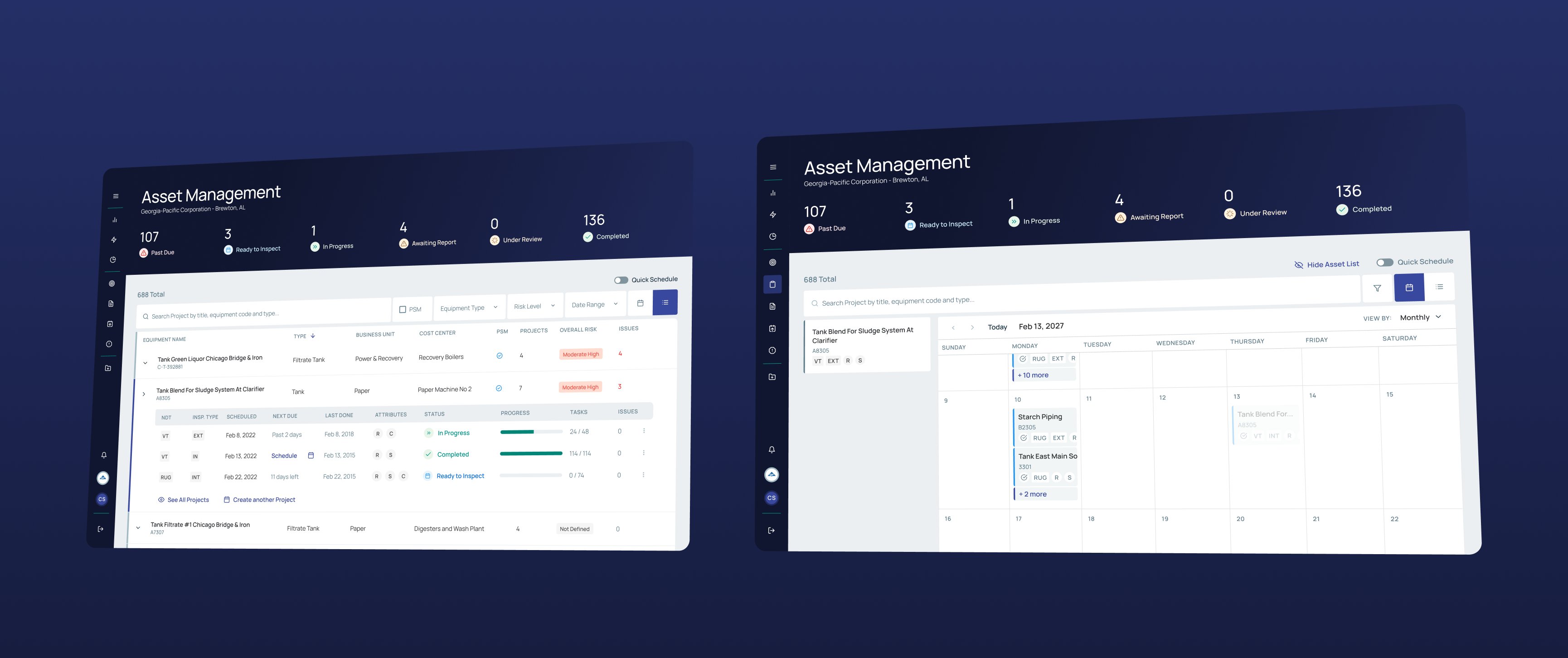
Flexible views for every role. I designed a scalable and filterable view system that let each user see data at the granularity they needed — without switching between tools.
The asset management view — designed to surface critical status at a glance
One platform, every role, all the data that matters
Nest gave every role on the team a shared view of equipment health for the first time. Inspectors completed cycles faster. Managers stopped chasing updates.
The platform became the foundation for what Gecko Robotics later evolved into Cantilever — their current flagship product.
Let's connect
Thanks — I'll be in touch soon.